Home › Journal › Why a sock blisters a heel
Why a sock blisters a heel
A blister is friction with nowhere to go. What is rubbing, why the same boot does it every week, and where a yarn helps and where it cannot.
Friction with nowhere to go
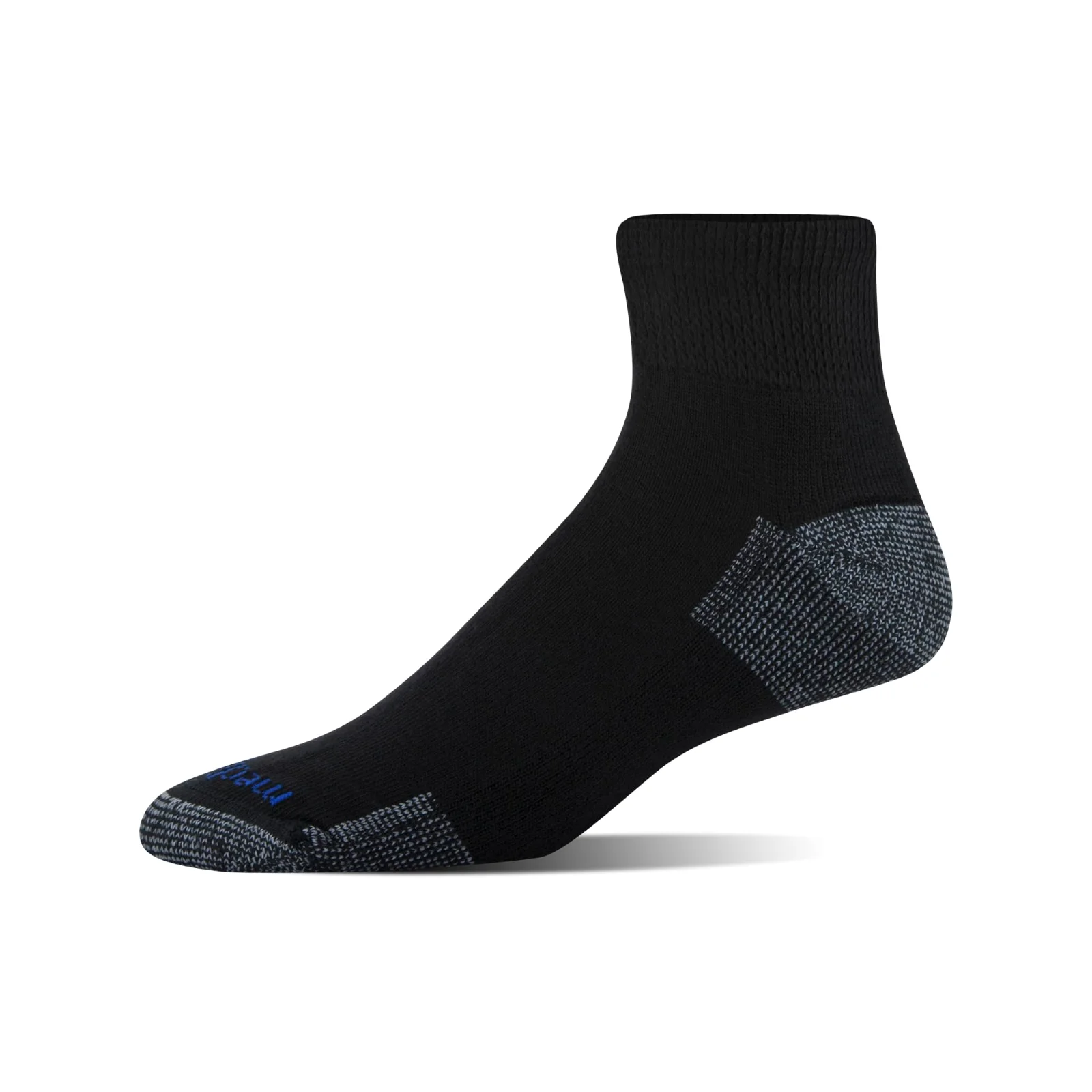
A blister forms when skin moves against the layer beneath it. That is the basic mechanism. The motion can be tiny, a few millimetres on each step, and repeated thousands of times in a day. Your skin shears. The tissue between skin layers separates and fluid collects. Nothing mystical happens. A sock changes where some of that motion is taken. A yarn that slides against itself will accept some of the relative movement. A sock that adds loops underfoot will pad, and it will also increase how much the sock grips the shoe interior. That grip keeps the fabric steady relative to the shoe. Your skin still moves relative to the sock if there is internal slide. In other cases the shoe moves under the foot and the sock moves with it. Friction does not care about intent. It cares about differences in movement and about where that movement ends up. Count the components. The skin. The sock fabric. The shoe lining. The friction point can be at any one of those interfaces depending on fit, material and moisture. A low-friction yarn shifts the moving interface inward, into the fabric. That shift takes some shear out of the skin. It does not make the movement vanish. If the shoe permits a lot of travel the same forces will still be present. Your perception of rub will track the place where the energy is released. Inspect the shoe interior. Feel how the sock sits. Small differences in where motion is absorbed change which patch of skin gets the repeated shear. The blister is a symptom. Friction is the cause.
The heel that travels
A heel that moves inside a shoe does so step after step. Each forward push and each landing repeats the same path. Your heel slides back slightly on the last part of stride, then returns on the toe-off. Over time that small travel concentrates stress on one band of skin. Many pairs of boots produce the same sore because nothing in the fit has changed between wearings. The boot may be roomy enough that the heel is free to move. The collar of a boot sits nearly where a quarter sock ends. When that alignment places fabric right at the collar you get repeated contact. A sock that grips the shoe will hold fabric still relative to the interior. If the sock stops moving and your heel keeps moving the skin must move beneath or above that static fabric. That relative movement creates shear. You can feel the pattern before the sore appears. A small hot spot, a pinch, a different texture. The solution sometimes is not in the sock. A shoe that is too large lets the heel travel with every step, and no sock stops that. Lacing tightly, switching to shoes with less internal length or using a different last can change the travel path. Notice where the leather or lining contacts your skin. The point of rubbing is predictable once you map the motion. Try observing the back of the shoe while walking. Feeling the travel gives a direct clue to which interface is doing the work. Adjust the element that allows the motion, not only the layer that feels it.
What a low-friction yarn changes
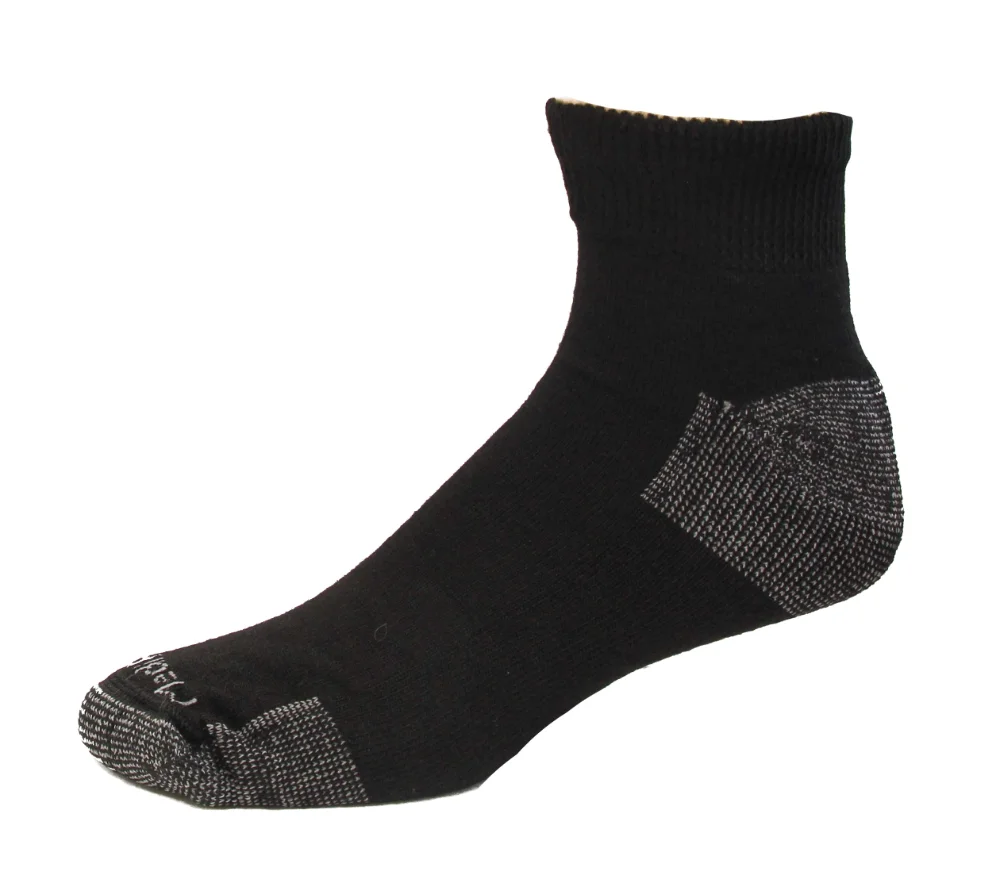
Low-friction yarns shift where the movement is absorbed. NanoGLIDE is knitted so the sock slides against itself rather than against skin, taking some of that movement into the fabric. When a sock contains this structure the interface between skin and fabric sees less direct shear. The movement is displaced into the fabric layers. The practical outcome is a change in sensation. The place where you used to feel rhythmic rubbing can feel quieter. Keep expectations clear. A yarn that slides inside the sock does not stop a heel that is physically moving several millimetres inside a too-large shoe. It also does not alter moisture behaviour unless the yarn itself is designed for wicking. Coolmax and Sorbtek move moisture through the sock rather than holding it against the foot. That is a separate mechanism. NanoGLIDE comes in two heights in this range: as a quarter sock and as a sport-cut liner. The sport-cut liner finishes below the shoe line so there is no fabric between the back of a shoe and the heel. A quarter sock stops about two fingers above the ankle bone and therefore occupies the area where a boot collar typically lands. Decide where the rubbing is happening and then select the knit and height that places the low-friction construction at the right interface. Cushioned elements change the picture twice over: they add padding, and they raise the friction against the shoe interior, which anchors the sock.
Damp, and why it makes everything worse
Moisture changes the friction equation. Coolmax and Sorbtek are yarns that move moisture through the sock rather than holding it against the foot. Cotton holds moisture rather than moving it. When fabric stays wet the skin is softer and more susceptible to shear. The interface becomes more compliant and less resistant to repeated sliding. Your skin will deform more readily and the small motions that would be harmless on dry tissue can become damaging on damp tissue. The thin Sorbtek dress crew fits under a shoe with no room to spare. That thin profile helps with fit in tight shoes, but it still relies on moisture movement to avoid a persistently damp microclimate. The Coolmax line here is a cushioned everyday crew. Cushioning adds loops underfoot. Those extra loops pad the foot and also increase friction against the inside of the shoe. The result is that the sock itself is held more still and local shear can be concentrated at the skin-sock boundary. Washing and care matter for these yarns. Machine wash cold with like colours. Use non-chlorine bleach only when needed. Avoid silicone-based softeners, including fabric softener and dryer sheets. Tumble dry low and do not iron. Following the care instructions keeps the yarns functioning as designed. If you continue to feel excessive dampness the material choice should be the first thing you change.
The seam nobody thinks about
A seam across the toes is often blamed for irritation. In this range the seam across the toes is knitted flat rather than folded and stitched, so there is no ridge across the toes. That construction reduces the chance of a raised stitch pressing against a skin fold. Your toes therefore meet a smoother line where many socks would show a folded ridge. Seams still matter elsewhere. The heel cup and the change in loop structure underfoot influence how the sock conforms and where it anchors. A cushioned sole is extra loops knitted into the underfoot and around the heel. Those loops pad the foot and they add friction against the inside of a shoe, which holds the sock still. When the sock is held still relative to the shoe and your heel continues to move the shear has to happen between skin and fabric. In some designs the knitted architecture includes targeted stretch zones that permit fabric to move with the foot. Where those zones are absent the fabric will resist motion and the demand is passed back to your skin. Think of seams and loop structures as elements that set the sock’s behaviour, not as passive joins. A flat toe seam reduces one common source of ridge irritation. The extra loops that create a cushioned sole change the interface in a different way by increasing grip. Consider both when you map the path of rubbing. The plain seam across the toes is a solved problem here. The rest is a balance of structure, padding and where movement is meant to occur.
Height, and where the rubbing actually is
Sock height determines which part of the foot meets which part of the shoe. A crew stops around mid-calf. A quarter stops about two fingers above the ankle bone. A sport-cut liner finishes below the shoe line, so there is no fabric between the back of a shoe and the heel. A boot collar lands almost exactly where a quarter sock ends. When those edges align with anatomical landmarks you get predictable contact patterns. If your boot collar meets the same margin of fabric day after day then the place of contact is fixed. The sport-cut liner removes fabric from the shoe-to-heel interface entirely by finishing below the shoe line. That absence can reduce interaction at the collar, but it also means less material to absorb motion. A quarter sock occupies the collar zone and therefore shifts some of the interface into fabric there. A cushioned sole underfoot changes this picture by anchoring the sock more firmly against the shoe interior. Where the sock is anchored the skin must either move under the sock or the sock must deform. The place you feel rubbing will be where relative motion still exists. You can map it: wear a liner for a few hours and note where heat or wetness accumulates. Switch to a quarter and repeat. The different heights put material at different contact points. Use that information to match height to shoe shape and collar position. The aim is to place the engineered elements where motion is greatest, not to hide motion by adding padding in the wrong place.
When the sock is not the thing to change
A sock can alter where friction happens, and it can shift moisture away from skin. It cannot, however, stop a heel from travelling inside a shoe that is too large. Where the shoe is roomier than the foot, the heel lifts and drops on every step, and nothing worn inside it will hold that still. The American Podiatric Medical Association says wearing appropriate shoes and socks goes a long way in reducing risk, and it recommends daily inspection of the feet, the sole and between the toes included. If you have a sore that will not heal or a foot that has lost feeling, that is a question for a clinician rather than a change of yarn. A clinician will advise on fit, structural issues and on whether medical intervention is required. Adjust the element that allows motion. Try different last shapes, alternate sizes, or a shoe with less internal length before assuming a sock will fix a fit problem. If your footwear choices are constrained, use sock height and knit to move the active interface as described earlier. Memory cushion crew is the thickest sock in this range. It requires room inside the shoe and will change the anchoring behaviour of the fabric. If you are unsure which approach to take, begin by checking fit and then look at material and height. Follow the care instructions we provide for best performance: machine wash cold with like colours, non-chlorine bleach only when needed, no silicone-based softener including fabric softener and dryer sheets, tumble dry low, do not iron.
Three more pieces like this one sit in the foot-care notes, everyone at MediPeds keeps every height and pack count one click away on the front page, and the bodies behind every statement about a foot are listed on how we update the catalogue.
Every pack count, every shoe size
Every packet in the MediPeds sock range sits behind this button, with the price from our last update against each one.