Home › Journal › What to look at on a foot at the end of a day
What to look at on a foot at the end of a day
Taking a sock off is the moment the check happens anyway. What the national health bodies say to look for, why the mark above the ankle is worth noticing, and where a catalogue stops and a clinic starts.
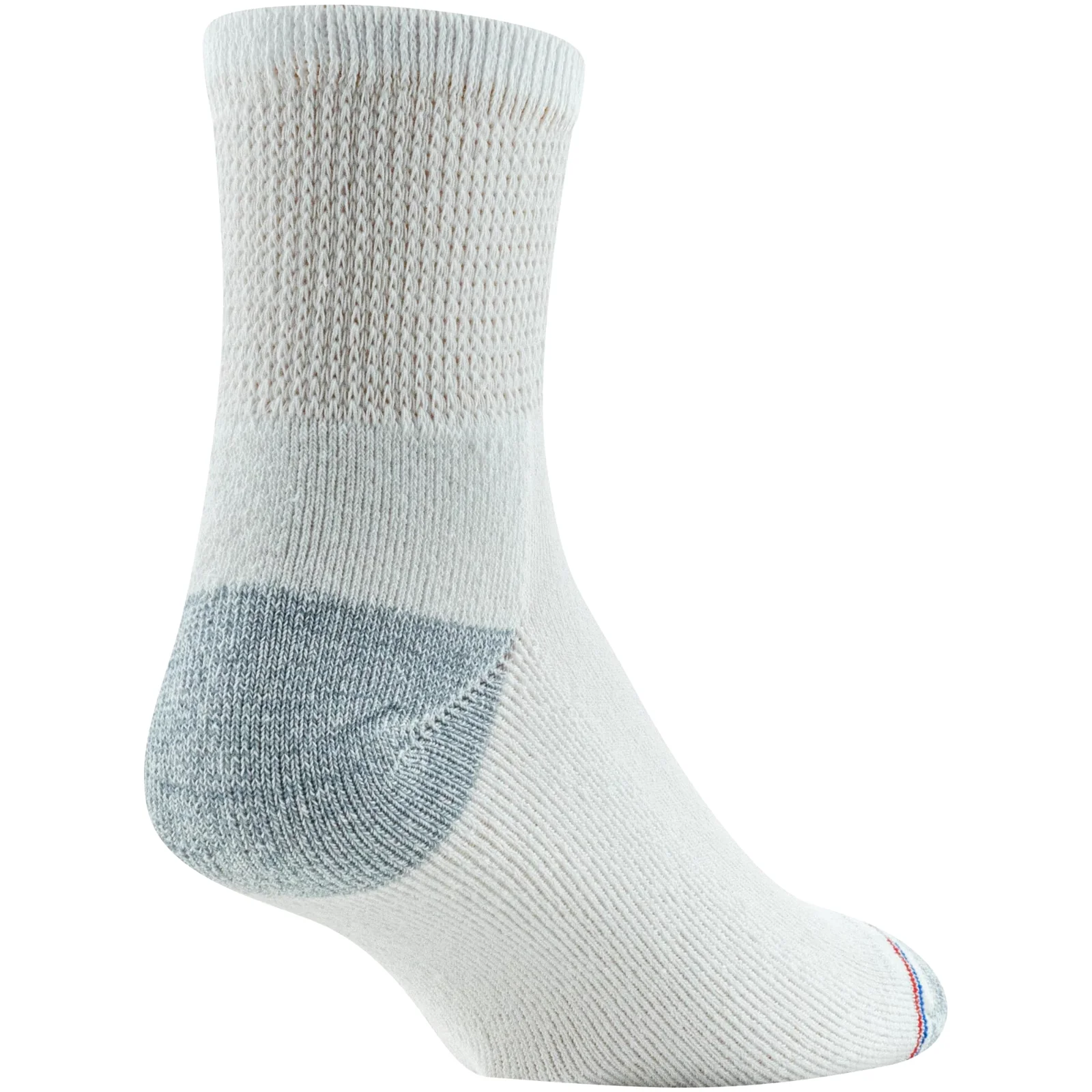
The moment the socks come off
The act of taking your socks off marks a practical moment. Feet have been in shoes and socks all day. They may have been compressed or warm. The National Institute of Diabetes and Digestive and Kidney Diseases advises remembering the check by doing it each evening when the shoes come off. That guidance makes the timing a mnemonic, not a diagnosis. The Centers for Disease Control and Prevention tells you to check your feet every day for cuts, redness, swelling, sores, blisters, corns, calluses or any other change to the skin or nails. You will find it easier to notice fresh marks at the end of a day because the foot is often larger then. The CDC also advises trying shoes on at the end of the day, when the foot is at its largest, and wearing socks when doing so. You may prefer a seat and good light. A mirror can be used to see the sole of a foot, or another person can look, which is how health bodies describe practical checks. Keep a routine. The NIDDK recommends clean, lightly padded socks that fit well and suggests socks with no seams are best. That suggestion is about sock choice rather than a medical claim. We note that our socks have a flat knitted seam across the toes rather than a folded and stitched seam. You may notice a line on the ankle from the sock cuff. An ordinary sock cuff contains a rubber thread knitted through it to hold the sock up and that thread is what presses a ring into the skin above the ankle by the end of a day. A non-binding top has no such thread. It is the same yarn as the leg with extra stretch and it rests rather than grips.
What the guidance actually says to look for
National guidance lays out items to notice and items to escalate. The Centers for Disease Control and Prevention lists cuts, redness, swelling, sores, blisters, corns, calluses or any other change to the skin or nails as things to check for every day. That list is comprehensive rather than prescriptive. The CDC also names symptoms that warrant prompt attention. Tingling, burning, pain, loss of feeling, changes to the skin and nail problems are included among the things the CDC says should prompt you to see a doctor rather than wait for the next appointment. The CDC gives specific examples that should be seen straight away: a blister, a sore, an ulcer, an infected corn or an ingrown toenail. The American Podiatric Medical Association advises inspecting the feet every day, the sole and between the toes included. That advice highlights areas you might otherwise miss. The NIDDK says a foot problem can be present with no pain to announce it, which is why routine visual checks are part of their guidance. The listed signs are signals reported by those bodies, not a clinical judgement of ours. The APMA also says that appropriate shoes and socks go a long way in reducing risk. That is their position and it is given here as attribution. The NIDDK warns against tight socks or elastic stockings and recommends remembering the check each evening when shoes come off. Those points are part of the official advice and not instructions from us.
| What to look at | Where on the foot | Which body says so |
|---|---|---|
| Cuts, redness, swelling, sores, blisters, corns, calluses, any other change to skin or nails | Entire foot and nails | Centers for Disease Control and Prevention |
| Tingling, burning, pain, loss of feeling, changes to skin and nail problems; blister, sore, ulcer, infected corn, ingrown toenail (reasons to be seen straight away) | Foot generally | Centers for Disease Control and Prevention |
| The sole and between the toes should be inspected daily | Sole and between toes | American Podiatric Medical Association |
| A foot problem can be present with no pain; clean lightly padded socks that fit well; socks with no seams are best; do not wear tight socks or elastic stockings; remember check each evening when shoes come off | Whole foot; sock advice applies to socks you wear | National Institute of Diabetes and Digestive and Kidney Diseases |
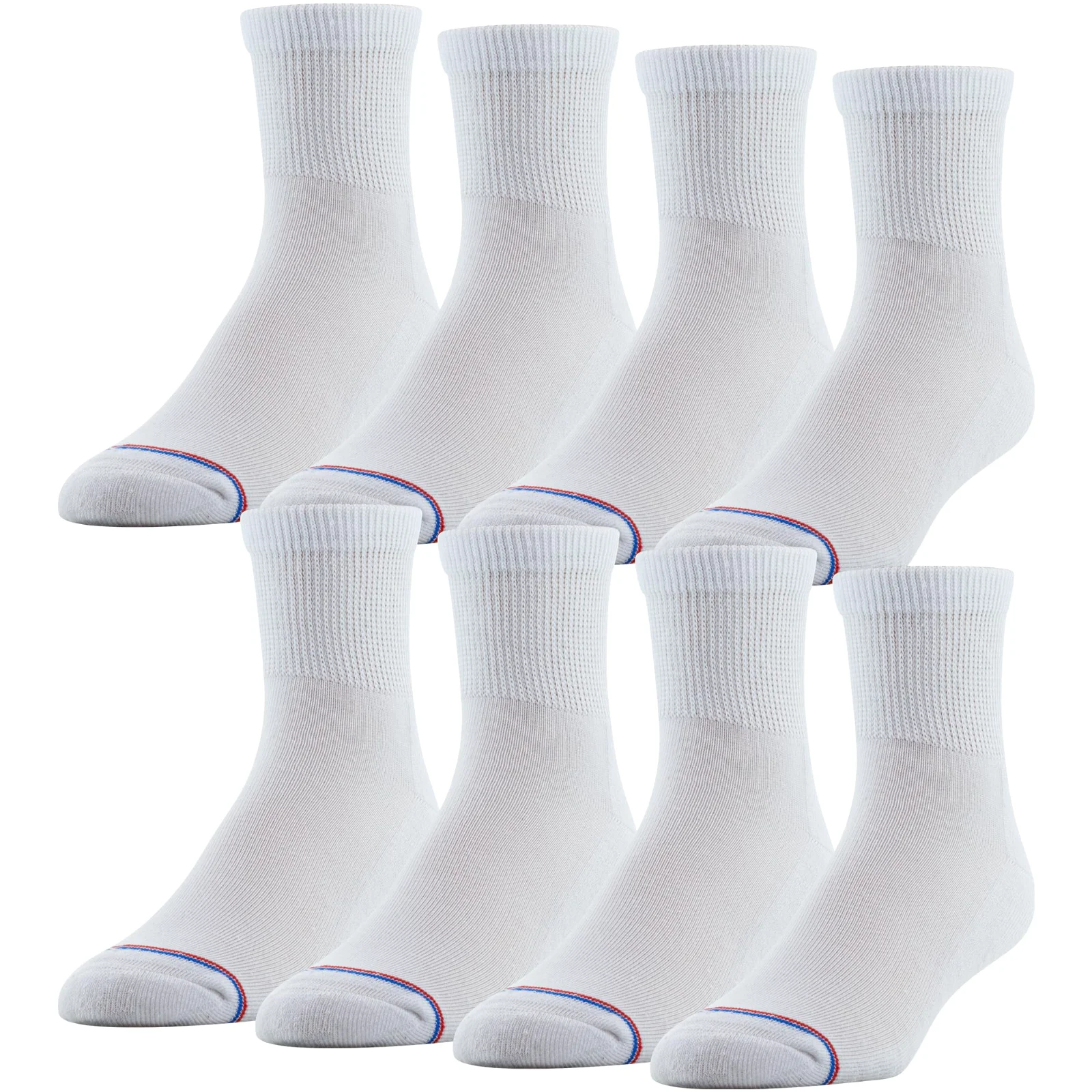
MediPeds Non-binding quarter socks with cushion, 4 shoe sizes
4 or 8 pairs a pack · Cushioned sole · 4 shoe sizes
$17.10
Seeing the parts you cannot see
The sole is the part most commonly missed in a quick glance. The American Podiatric Medical Association explicitly advises inspecting the sole and between the toes as part of daily checks. A mirror can be used to see the sole of a foot, or another person can look, which the guidance mentions as practical options. You may prefer to sit and point the foot at a mirror, and then use reflected light to examine creases and the area beneath the toes. Routine checks can reveal changes that are subtle and gradual. The National Institute of Diabetes and Digestive and Kidney Diseases warns that a foot problem can be present with no pain to announce it. That warning explains why visual inspection is important even when sensation feels normal. The Centers for Disease Control and Prevention lists nail changes among the things to watch for in the daily check. Toenails can hide issues at the edges or under the free margin. You may need to lift the nail fold in good light to see the skin beneath. The APMA recommends regular inspection rather than occasional checks, and the CDC suggests trying shoes on at the end of the day when the foot is at its largest. That point is practical: things that rub or press at the end of the day can be associated with how the shoe and sock have held the foot. Be methodical. Work from heel to toe, then across the sole and between the toes. If another person helps you, the guidance accepts that as an appropriate technique. These statements report official guidance and give no clinical interpretation.
The mark above the ankle
Those faint rings you sometimes see above the ankle come from the way a sock cuff is constructed. An ordinary sock cuff has a rubber thread knitted through it to hold the sock up. By the end of a day that buried thread is what presses a ring into the skin above the ankle. That description is a construction fact about common socks rather than a health diagnosis. A non-binding top is different. It uses the same yarn as the leg but with extra stretch so that it rests rather than grips. The National Institute of Diabetes and Digestive and Kidney Diseases recommends socks with no seams and says not to wear tight socks or elastic stockings. Its guidance relates to fit and comfort and is reported here as attribution. The American Podiatric Medical Association highlights appropriate shoes and socks in its advice about daily inspection and risk reduction. Those bodies provide the context for noticing marks from elastic or tight cuffs. You might find a ring that fades soon after removing the sock. You might also find a ring that persists or is accompanied by redness or broken skin. The Centers for Disease Control and Prevention lists redness and swelling among the changes to watch for every day. When redness, broken skin or swelling appear alongside an imprint they are items named in public guidance. We state that our toe seam is knitted flat rather than folded and stitched. That construction reduces bulk at the toes but it is not a medical claim. Nothing in our catalogue is a medical device, and none of our socks is prescribed, measured to a leg or followed up by anyone. Those facts describe the product role rather than offer diagnosis.
Damp, seams and the places a rub starts
Moisture and seams are where friction often begins. The Centers for Disease Control and Prevention includes blisters among the things to look for in a daily check. Blisters are a common endpoint of repeated rubbing and moisture. The National Institute of Diabetes and Digestive and Kidney Diseases recommends socks with no seams and clean, lightly padded socks that fit well. That recommendation addresses how a sock can affect surface interactions, and it is reported here as a direct attribution. Our socks have a flat knitted seam across the toes rather than a folded and stitched seam. The flat seam reduces the raised edge at the toe junction, which is a construction detail and not a clinical promise. Persistent dampness between toes can change the skin over time. The APMA advises inspecting between the toes as part of a daily routine. That instruction comes from the podiatric association and it is included here without reinterpretation. You might find a localized redness where a seam meets a ridge of skin. You might notice a softening of the skin in folds that were warm and moist. The CDC lists cuts, sores and blisters as items to check every day. These observations are reported from public guidance. They are not treatment suggestions. If any of the named items appear the relevant bodies recommend clinical assessment rather than waiting. The wording here follows those public statements and does not offer clinical advice.
Never barefoot, and what that has to do with socks
The Centers for Disease Control and Prevention states clearly that you should never go barefoot, indoors included, and that you should always wear shoes and socks or slippers. That is explicit phrasing from their guidance. The NIDDK recommends socks that are clean, lightly padded and that fit well. It also recommends socks with no seams and warns against tight socks or elastic stockings. Those points are cited here as guidance rather than as our endorsement. You may find it natural to remove shoes and walk barefoot at home. Public guidance does not recommend that practice. The APMA links appropriate shoes and socks to a reduction in risk and advises inspecting feet every day. Those associations are presented as the association states them. Socks act as a layer between foot and shoe, and that is the whole of what this catalogue says about them. Late in the day is also when that body suggests buying shoes, with socks on, because the foot is then at its largest. That practical detail explains why people who follow the guidance will try shoes on with socks. Our product notes include construction features such as a non-binding top option and a flat knitted toe seam. These are design descriptions only. They do not imply that any sock in our catalogue will prevent or treat a health issue. The NIDDK reminder to make the evening check when shoes come off is a behaviour suggestion from a national institute and it is reproduced here exactly as an attribution.
When to stop reading and call someone
There are clear boundaries between catalog information and clinical care. The Centers for Disease Control and Prevention lists tingling, burning, pain, loss of feeling, changes to the skin and nail problems among the things to see a doctor about rather than wait for the next appointment. That sentence is an attribution of CDC guidance and not our clinical advice. The same body names a blister, a sore, an ulcer, an infected corn or an ingrown toenail as reasons to be seen straight away. Those are specific items the CDC says warrant prompt medical assessment. The American Podiatric Medical Association recommends seeing a podiatrist regularly and advises that inspection of the feet, including the sole and between the toes, is part of preventive care. That recommendation is given here as their professional position. The same institute makes the point that a foot can be in trouble without hurting at all. That warning explains why the official advice emphasizes daily visual checks rather than relying only on sensation. If you encounter any of the problems named by these bodies their guidance is to obtain clinical assessment. None of what we knit is a medical device, and no pair of it is fitted to a leg or checked afterwards by anyone. Where public guidance says the next step is a clinical assessment, that is where the next step is.
Three more pieces like this one sit in the foot-care notes, everyone at MediPeds keeps every height and pack count one click away on the front page, and the bodies behind every statement about a foot are listed on how we update the catalogue.
Nothing on this site is medical advice. A sock is a sock: a non-binding top and a smooth toe seam are ways of knitting a cuff and a seam, not a treatment, and nothing here diagnoses, prevents or relieves anything. If your feet have lost feeling, if a sore is not healing, or if a doctor has asked you to wear a fitted compression stocking, that conversation belongs with them and not with a catalogue.
Every pack count, every shoe size
Every packet in the MediPeds selection sits behind this button, with the price from our last update against each one.