Home › Journal › How to read a shoe-size range on a sock packet
How to read a shoe-size range on a sock packet
Men 7-12 with women 10-13 is one packet and two feet. What that range measures, why it is so wide, and which way to go when you sit between two.
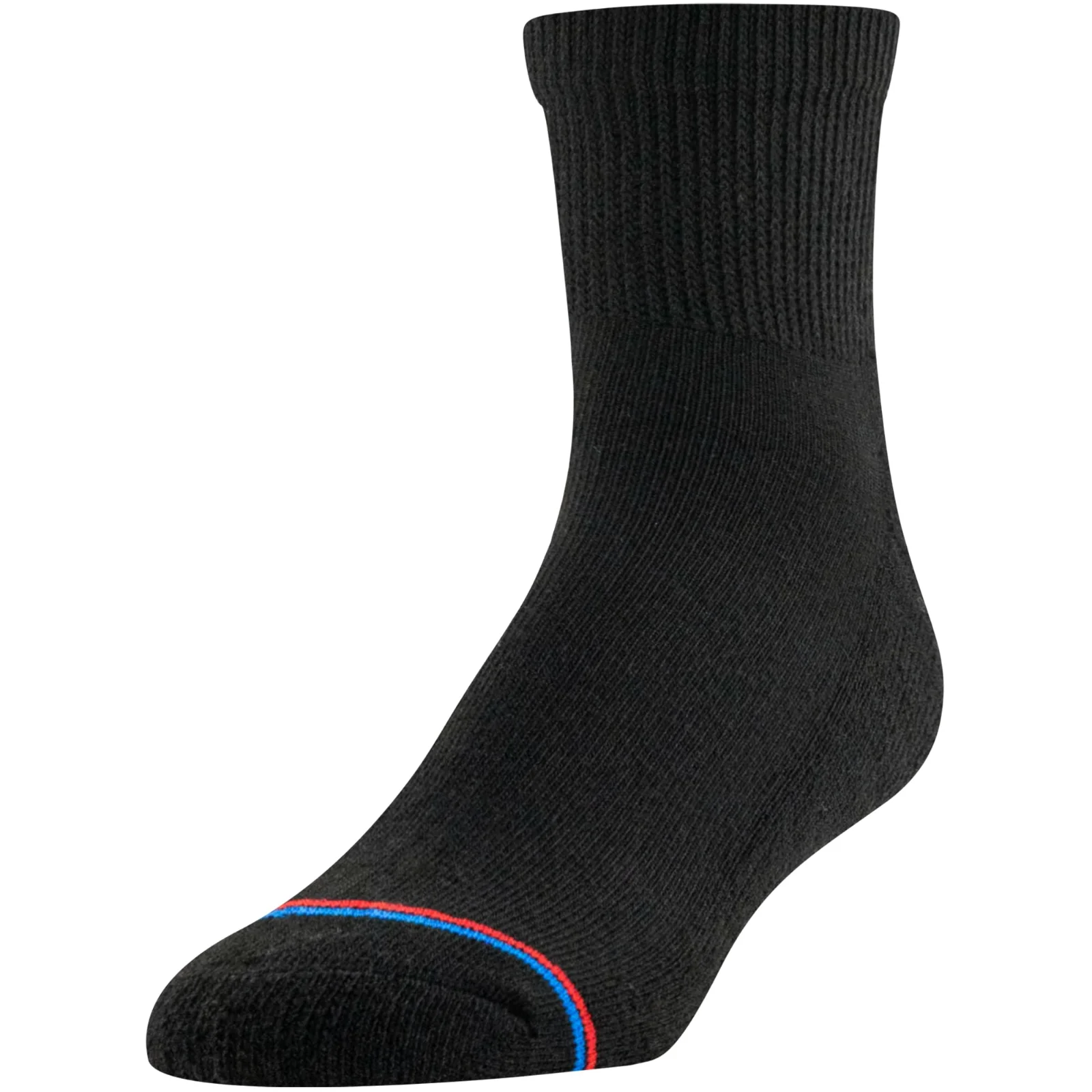
One tube, two sets of numbers
A sock size printed on the packet is a shoe-size range, not a foot measurement in inches or centimetres. Read the numbers as the shoes that the sock is intended to cover. The knitted tube that becomes a sock is what does the fitting. You may see two ranges on one packet. That is because one tube is often printed with two ranges, one for men and one for women, since the same tube can fit two different shoe-size systems. Look for the label that shows both sets of numbers. If a packet reads a men range and a women range, the sock itself is unchanged. The two sets of numbers are a translation, not a different product inside the packet. You can think of it as a single knitted shape with two ways of naming the shoe sizes it suits. The knitting pattern, the cuff elasticity and the yarn determine how the tube stretches along the foot and up the leg. A cushioned sole, for example, uses extra loops knitted into the underfoot and around the heel and therefore takes up more room in the shoe than a plain knit. You will find thin and thick options across the run. The thinnest is a Sorbtek dress crew and the thickest is a memory cushion crew. Packet labels do not measure instep, toe box or calf girth directly. They describe the shoe-size span the knitted tube was cut to fit.
| Range as printed | Which feet it covers | Note on where it sits in the run |
|---|---|---|
| men 6-9 with women 7-10 | Men and women | Lower men's / lower women's overlap |
| men 6-9 with women 6-10 | Men and women | Lower men's with extended women's range |
| men 7-12 with women 10-13 | Men and women | Mid to large men's, larger women's |
| men 10-13 | Men only | Upper-mid men's |
| men 12-15 | Men only | Upper men's |
| shoe 6-10 | Unspecified | Small unisex run |
| shoe 7-12 | Unspecified | Mid unisex run |
| shoe 9-11 | Unspecified | Narrow mid run |
| shoe 10-13 | Unspecified | Upper mid unisex |
| shoe 12-15 | Unspecified | Upper unisex run |
Why the range is as wide as it is
You will notice that a single packet can cover five shoe sizes, and that breadth is intentional. Knitted fabric stretches along the foot and across the instep. The same knitted tube can accommodate small differences in foot length because the yarn and stitch pattern have give. Manufacturers cut runs so that small increments in shoe size fall inside the elastic range of one tube. The printed range reflects the practical limits of that give. A plain-knit tube needs less internal volume than a cushioned one. The cushioned sole listed on some packets is extra loops knitted into the underfoot and around the heel. Those extra loops add bulk and therefore consume shoe volume, which is why a cushioned sock sits differently in the same shoe than a thin dress crew. A sock compresses a little inside a shoe, and that compression is part of the fit. Compression is part of the fit rather than a mismatch. A wide run reduces the number of distinct tubes required across a collection. That is why you see both three-size and five-size spans in the catalogue. The run also separates narrow cases by construction. Extra wide socks are knitted with more yarn around the cuff and more give in it, while their foot section remains at the standard width for the shoe size. If you are trying to match sock to shoe, note that size and thickness together determine how much room the sock will use inside your shoe.
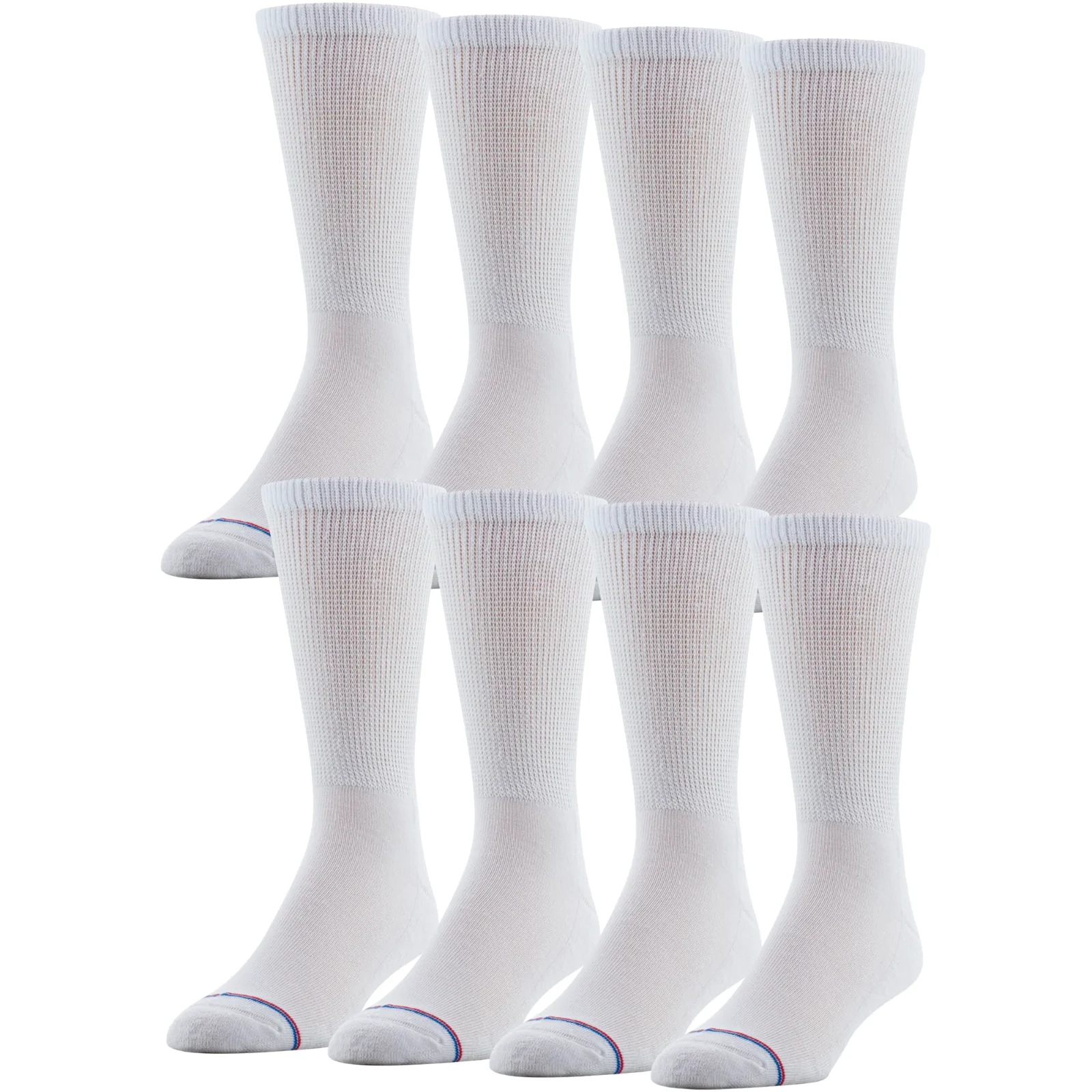
MediPeds Extra wide non-binding crew socks with cushion
4 or 8 pairs a pack · Cushioned sole · 3 shoe sizes
$25.99
What a sock that is too short does
When a sock is too short its heel pocket does not sit where you expect. The knitted heel pocket pulls forward. The padded heel then sits under the arch instead of under the heel. That displacement changes the distribution of padding and the point where the stitch pattern meets the shoe. You will sometimes feel the cushioned section where it does not belong and notice the seam of the heel in an odd place. A sock that stops short also puts more fabric at the toe box. The foot length is unchanged, so the extra forward pull must come from somewhere. Short socks can make the back of the ankle raw from friction if the cuff rides down. That friction is a mechanical effect, not a medical claim. You will find it more noticeable in thicker socks because the extra loops increase bulk and reduce stretch. The Sorbtek dress crew, being the thinnest in the range, tends to show less of that effect for the same difference in shoe size. Conversely, if you have a sock that fits to the foot length but leaves the heel pocket too far forward, swapping to the next size up is the direct remedy. Try the sock on and walk briefly to see whether the heel settles into place. The heel should align under your heel bone, not the arch.
What a sock that is too long does
A sock that is slightly too long will usually fold a little at the toe, which most people do not notice inside a shoe. The extra length collects where the toe box has spare space and forms a soft fold. You may feel that fold if your shoe is tight at the front or if the sock is cushioned and therefore thicker. A more obvious surplus can cause bunching; that is more likely when the sock is both long and bulky. The cushioned sole takes up more room in the shoe than a plain knit, so a long cushioned sock will create larger folds than a long thin sock. Excess length can also change the position of the heel pocket by allowing the foot to slide forward relative to the knitted tube. When that happens the heel pocket may no longer sit snugly on the heel and movement increases. If a sock slips down from the calf because it is long, the problem is often that the cuff tension and cuff construction do not match the leg rather than that the foot length is wrong. If a sock pulls on over the toes and then will not come past the calf, the issue is width and not length. A larger shoe size gives a longer sock, not a wider one.
Rounding up, and the one case for rounding down
When you are between printed sizes, prefer the larger size in most cases. A sock that is slightly long will usually fold at the toe and remain largely unnoticed inside a shoe. A short sock, however, shifts the heel pocket forward so the cushioned heel sits under the arch. That misplacement is the clearer problem to avoid. If you must pick, choose the size that prevents heel displacement. There is one reason to round down. If you prefer a slim profile in a shoe and you are selecting a thin knit, choose the smaller range. The Sorbtek dress crew is the thinnest in the catalogue and therefore occupies less shoe volume. A smaller size in that thin knit will yield a snugger fit without the bulk a larger size would add. Be mindful of sock construction. A memory cushion crew is the thickest in the range and will use more space; rounding down into a thick knit can make the shoe feel tight. If your shoes already fit tightly with thin socks, do not pick a thick cushioned sock in the smaller size. Try on both the sock and the shoe together for the final check and walk a short distance to see how the heel pocket behaves.
When size is not the problem at all
Sometimes the fit complaint is not about length. If a sock slides over the toes but will not come past the calf, you are facing width, not shortness. Going up a size lengthens the sock and leaves the leg exactly as narrow as it was. The extra wide socks in this catalogue are produced by knitting more yarn round the cuff and adding give to the cuff, while the foot remains at the standard width for its shoe size. That means width issues need a different solution from length issues. Check the sock construction and the listed style. Cushioning affects volume. A cushioned sole is extra loops knitted into the underfoot and around the heel, and those loops take up more shoe space than a plain knit does. Materials matter for stretch, but packet labels tell you only the range and style; they do not provide precise circumference measurements. If you are trying shoes on with socks, follow the Centers for Disease Control and Prevention advice and try shoes at the end of the day when your foot is at its largest, wearing the socks you intend to use. Packet quantities vary across the run. Packs of two, three, four, six and eight pairs are offered and larger packets cost less per pair. Colours in the range include white, black, white with grey, black with grey and black with pink, with the grey yarn used for the cushioned areas on two-tone socks.
Buying for someone else's feet
When you buy socks for another person, gather three pieces of information. First, ask their shoe size as they would report it on their shoes. Second, ask which sock style they prefer: thin like a Sorbtek dress crew or thick like a memory cushion crew. Third, check whether they usually wear shoes late in the day. Those three points determine which printed range and which construction to choose. If the packet shows two ranges and you are unsure which applies, remember that one sock is often printed with two ranges because it is the same knitted tube on two different feet. That means you can match the named range to the shoe sizing system the person uses. If you are choosing a gift and cannot obtain precise size information, prefer the larger size within a nearby range to avoid the heel-pocket-forward issue that short socks create. Mention the available packet sizes as an option. Larger packets cost less per pair and may be sensible for everyday basics. Do not confuse thickness with width. If a sock slips over the toes and then will not pass the calf, look for an extra wide option rather than a longer size. Finally, include colour preference. Choices are white, black, white with grey, black with grey and black with pink, and on two-tone socks the grey indicates the cushioned yarn.
Three more pieces like this one sit in the foot-care notes, everyone at MediPeds keeps every height and pack count one click away on the front page, and the bodies behind every statement about a foot are listed on how we update the catalogue.
Every pack count, every shoe size
Every packet in the MediPeds shelves sits behind this button, with the price from our last update against each one.